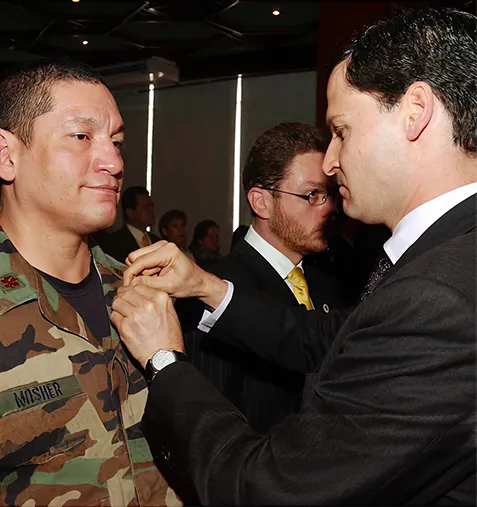


Lorem ipsum dolor sit amet, consectetur adipiscing elit. Praesent cursus lacus vel porta ultricies. Sed vitae augue sagittis, sollicitudin risus sed, laoreet lorem. Etiam sed velit lacinia, iaculis nisl eu, facilisis lacus. Sed ex leo, lobortis sit amet interdum ac, semper sed felis. Nulla nisi ante, sodales et ligula eget, mollis elementum risus. Duis laoreet pellentesque libero, nec facilisis sem ultricies a. Sed lobortis justo in neque tincidunt faucibus.
Lorem ipsum Dolor Sit Amet
Not very long after I arrived at Joint Task Force-Bravo, I noticed that my uniform was “out of date”. My green camouflage Battle Dress Uniform had served me well through the years, but when I looked at my colleagues sitting around conference table during the morning Battle Update Brief (BUB) with the JTF-Bravo Commander, I noticed that nearly every officer wore evidence of their experience in the “desert”, the “sand box” —as the Middle East was commonly referred to. The commander’s brief included weekly personnel data, such as all departures and new arrivals to the command, and it seemed as if everyone was either going to Iraq (many for their second deployments) or returning from there. JTF-Bravo was a small joint service command with Army, Air Force, and Navy personnel (about 1000) assigned to a Honduran owned air base. The command’s mission was to enhance the regional cooperative security initiatives and support democratic development in Honduras and neighboring countries, which often included humanitarian, medical, and disaster relief missions. In addition to advising the JTF-Bravo Commander on disciplinary and military justice matters, my role included advising unit commanders on operational and international legal issues arising in their training and support missions. Legal issues typically involved property damage claims occurring during military exercises, review of base construction contracts and equipment rental agreements, fiscal law analysis for the lawful use of appropriated funds, rules of engagement that comply with human rights and local treaties, and, of course, your bread-and-butter Uniformed Code of Military Justice (UCMJ) misconduct from sexual assaults between service members to criminal acts committed by military service members in the host country. In short, JTF-Bravo was known to be a great operational training site for future commanders deploying to combat zones, and after a few months, I was also contacted by the Air Force deployment command to discuss orders to Iraq.
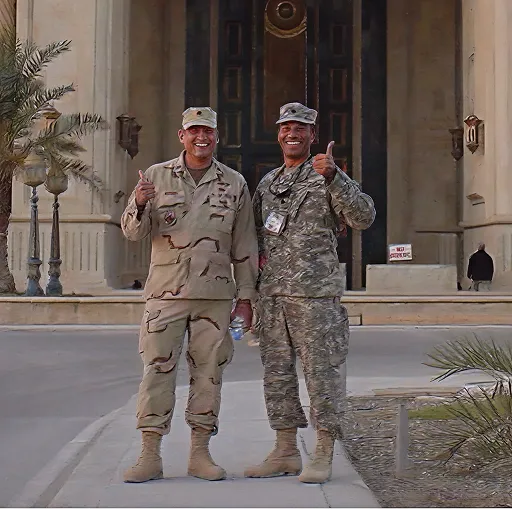
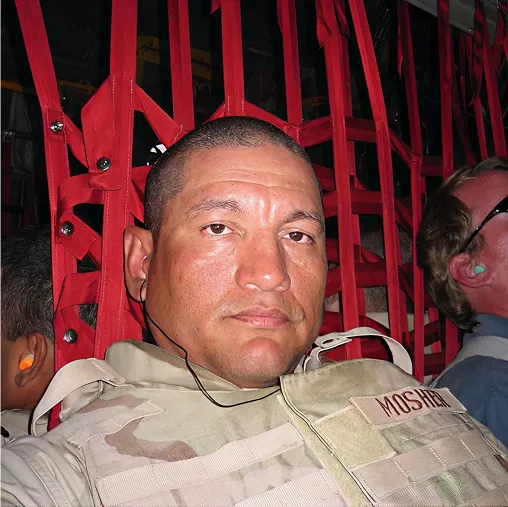
Lorem ipsum Dolor Sit Amet
On December 14th, 2006, at approximately 1400 hours, I was given an order by the Camp Cropper detention officer to enter a makeshift conference room where Saddam Hussein was awaiting us alone waiting for his meeting with the International Committee of the Red Cross (ICRC). With a couple of steps, I was soon standing ten feet in front of Saddam, and I was the only military official, American, and lawyer in the room, with 10-12 guards immediately outside the iron door. He wore a black suit, white collar shirt, and had red eyes from his thick cigar smoke surrounding him. Saddam had just finished meeting with his defense counsel and it was my turn to get the meeting under way. At this point in my deployment, I had coordinated and escorted ICRC delegates at least a dozen times to inspections of various U.S. detention facilities and detainee interviews throughout Iraq so the MNF-I Commander could report to the Department of Defense, Department of State, Congress, and the President on the status of human rights compliance for U.S. detention operations in Iraq. My role was to review, brief, and advise the Deputy Commander, and ensure the implementation of all ICRC recommendations as directed – a challenging task considering MNF-I was managing over 15,000 detainees located throughout Iraq at the time. To complicate matters, the command was still recovering from the fallout of the Abu Ghraib detention facility, which we had finally turned over to the Government of Iraq for operation and management and, thereby, closed an important chapter in U.S. relations with the “international community”. What brought me face-to-face with Saddam that day was a mission to address the legal support issues involved in his appeal efforts with the assistance of the ICRC. During my visits to Saddam, I never spoke directly to him, and always sought to avoid having my name end up as an “issues” entry in my status reports to the general. Saddam was a US detainee since his capture on December 13, 2003 and I knew his days were running short. My deployment to the desert was filled with many high-octane days, but the days after my visit with Saddam were pure adrenaline as we prepared to execute a contingency plan to turn Saddam over to the Government of Iraq to execute his death sentence should his last appeal efforts fail.
Lorem ipsum Dolor Sit Amet
On July 2, 2008, Colombian Government and the Ministry of Defense conducted a spectacular made-for-television undercover operation to rescue hostages under the guise of a generic humanitarian organization seeking to assist the FARC in transporting key hostages. Operation Jaque (“Checkmate”) flew two undercover transport helicopters to a designated pick up point and persuaded enemy leaders to hand over and load 15 hostages, including Ingrid Betancourt and the Americans. It was a victory for Colombia and the US since the US Embassy, and military group, had actively sought to support their recover for over 5 years. Several of the other Colombian hostages were captives for over 10 years. Without a single shot being fired, the operation was a tremendous success by all measures. And although media reported that only minor US intelligence support was provided to the Colombian operation, each of the 1000+ service members assigned to the US Embassy Military Group felt a sense of pride, joy, and thankfulness for the rescue, particularly since it occurred just before the Fourth of July celebrations. Since my office in the Ministry of Defense was down the hall from the Commanding General of the Colombian Army, General Mario Montoya, making my way to my desk through the crowd of reporters and supporters was both heartwarming and challenging at times. It seemed that the Ministry of Defense was well on its way to winning the war against the FARC, but in the eyes of the international community the Colombian military still fell short of properly addressing the numerous cases of alleged extrajudicial executions and criticism of impunity and lack of accountability.